Phase 1: Foundation
Hospital equipment learning center
Hospital rooms can look like a maze of machines, tubes, and monitors. Each piece of equipment is there to help the care team watch, treat, and protect you. This guide explains what common bedside items do, what they look and sound like, and when to speak up.
Monitoring devices
These machines watch important body signs such as heart rhythm, oxygen level, blood pressure, and temperature.
Blood pressure cuff
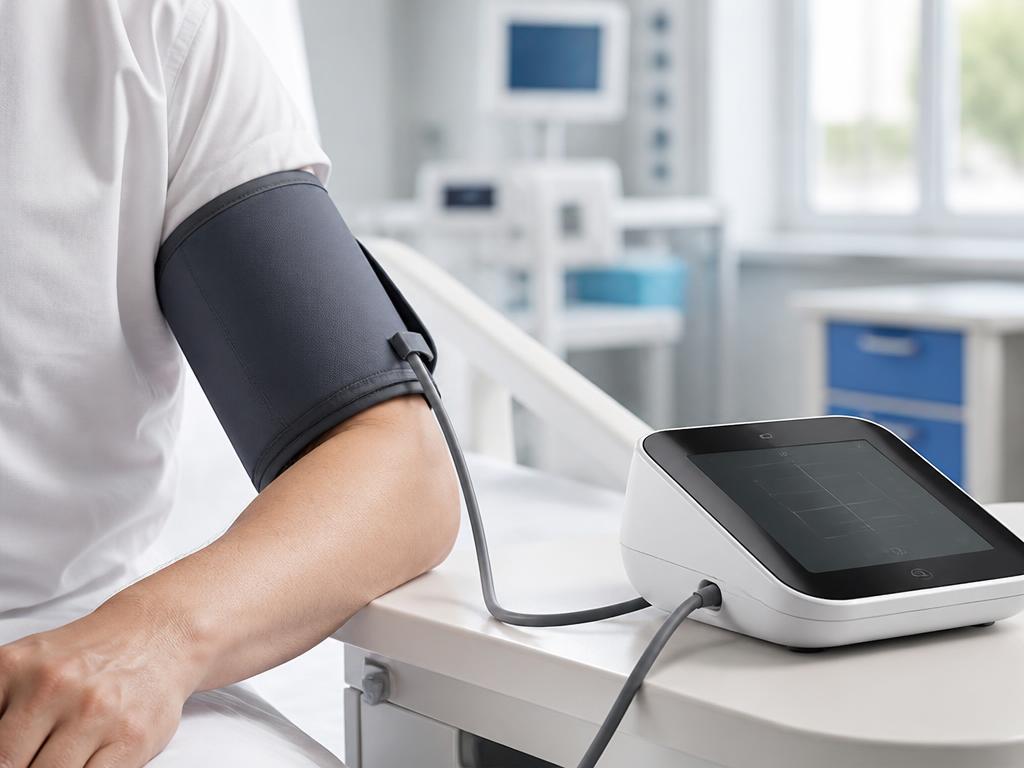
Blood pressure cuff
What it does: A wrap around the arm or leg that inflates to check blood pressure and sometimes heart rate.
What it looks like: A cloth cuff wrapped around the upper arm or leg and connected by a tube to a monitor or a handheld device.
What you may notice: An automatic cuff inflates with a soft whirring sound and squeezes the arm. It may run on a set schedule, such as every 15 minutes or every few hours.
When to ask: Tell the nurse if the cuff becomes very uncomfortable, leaves a deep mark, or if the arm is swollen, injured, or numb.
Pulse oximeter
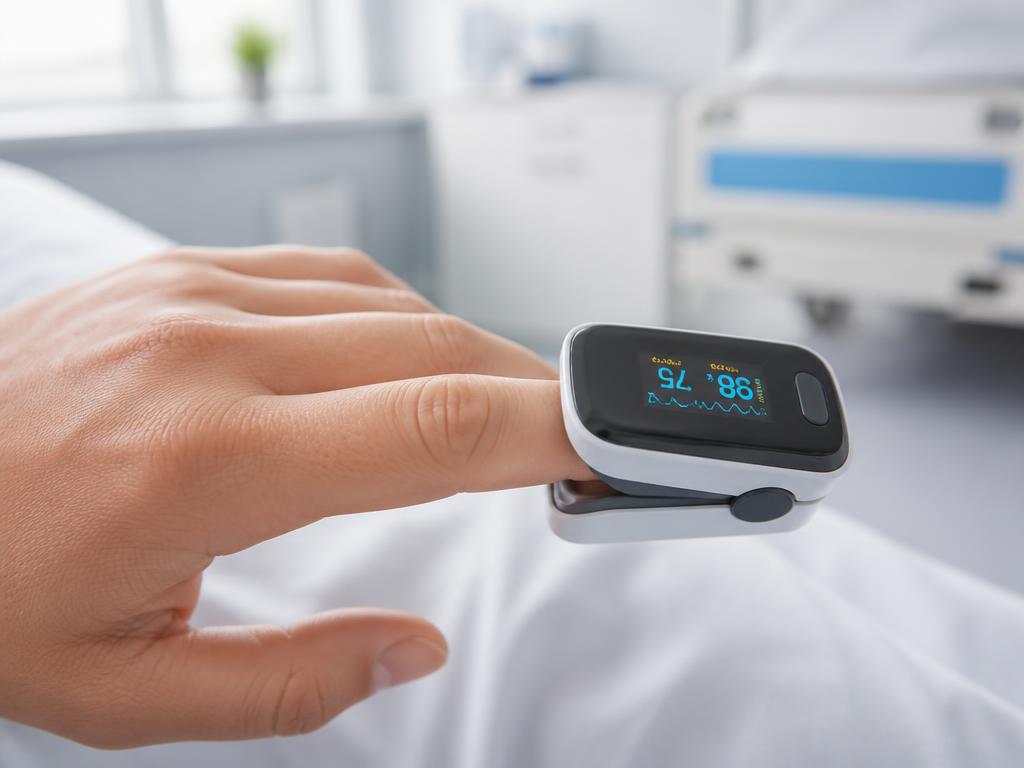
Pulse oximeter
What it does: A small clip or sticker that measures how much oxygen is in the blood without drawing blood.
What it looks like: A soft clip on a finger, toe, or earlobe with a tiny red light. Some are adhesive stickers placed on the finger or foot.
What you may notice: The monitor may beep if the oxygen number drops too low or if the probe loses its signal.
When to ask: Ask what oxygen number is usual for you, whether it is okay to remove the clip when walking, and what to do if the number keeps dropping.
Temperature probe
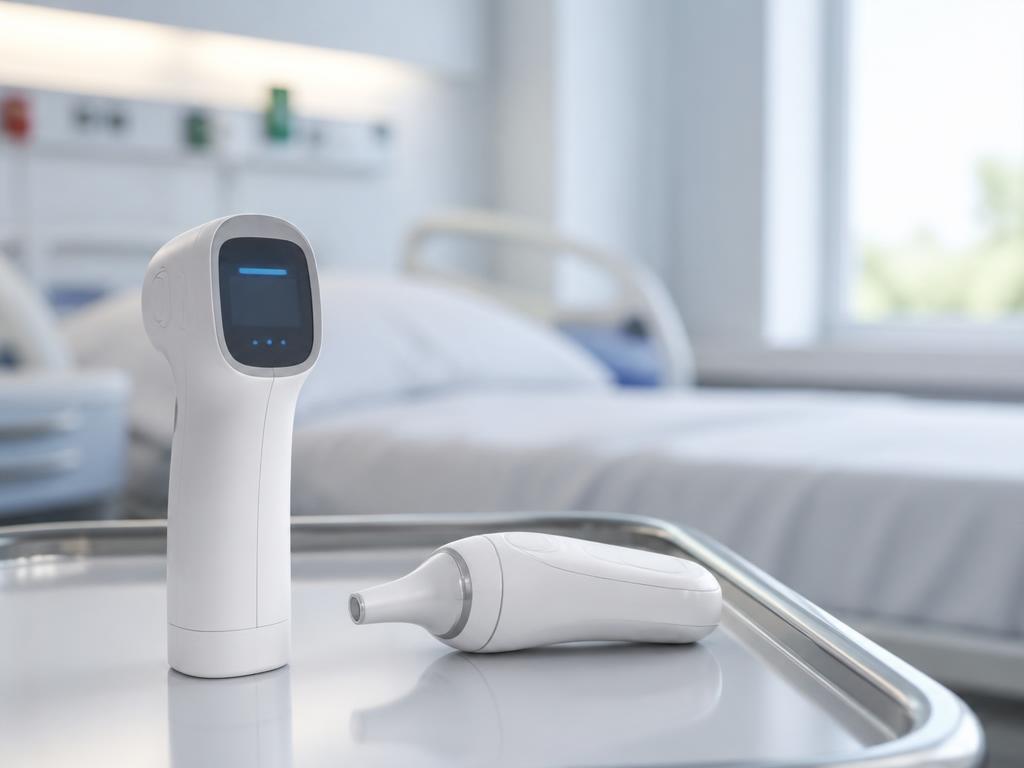
Temperature probe
What it does: Measures body temperature to check for fever, low temperature, or response to treatment.
What it looks like: May be a small sticker on the skin, a probe in the mouth or ear, or a sensor in a special catheter.
What you may notice: Usually silent. The bedside monitor displays the temperature next to other numbers.
When to ask: Ask what temperature range is expected for you and whether you should report chills, sweating, or feeling very hot or cold.
Heart monitor / EKG leads
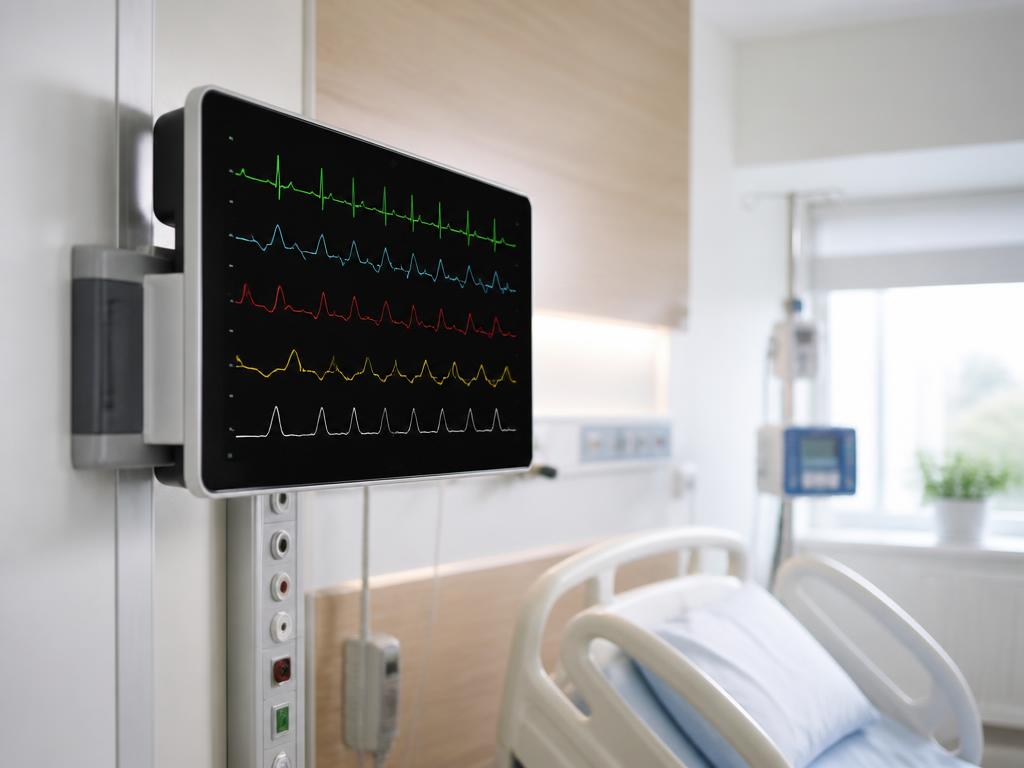
Heart monitor / EKG leads
What it does: Sticky pads connected to wires that track heart rhythm and show it on a bedside screen or at the nurses' station.
What it looks like: Small white or colored pads on the chest, sometimes with colored wires running to a small box or monitor.
What you may notice: Some monitors beep with each heartbeat. Others beep for routine reminders or when the rhythm changes. Ask staff which beeps are normal.
When to ask: Ask which beeps need attention. Call the nurse if a pad falls off, the skin under a pad itches or burns, or you feel dizzy, fluttering, or chest discomfort.
IV pole and pump
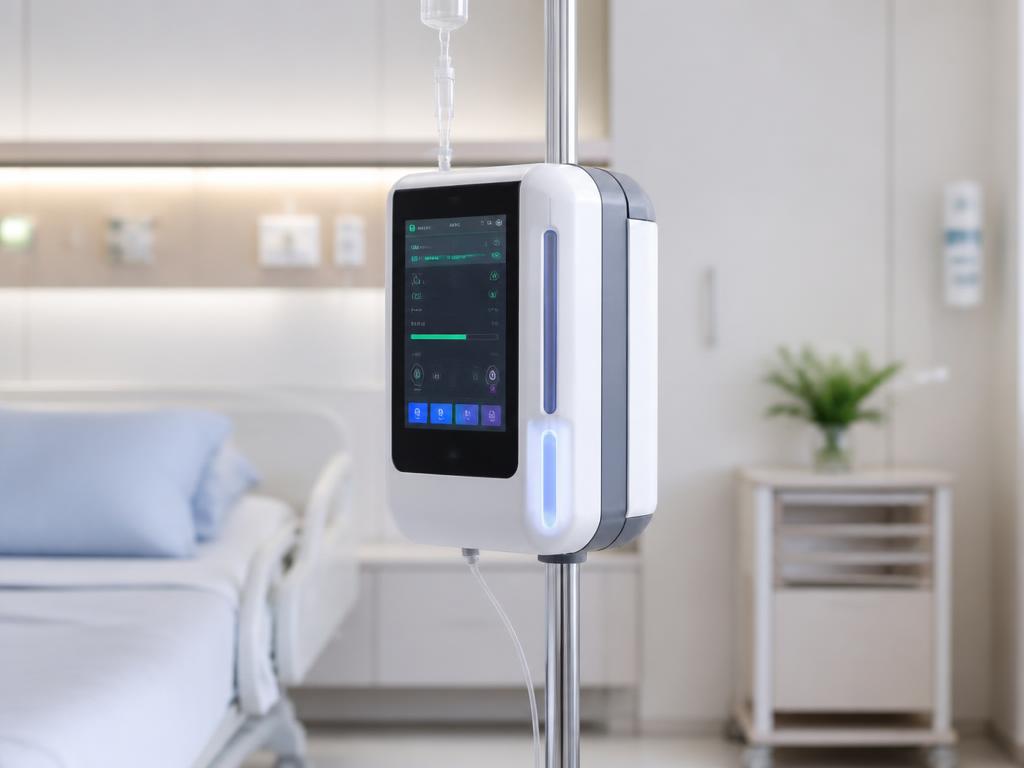
IV pole and pump
What it does: Delivers fluids, antibiotics, blood products, or nutrition through a small tube placed in a vein.
What it looks like: A tall metal pole with hooks at the top for hanging bags. A small electronic box with a screen, buttons, and tubing threaded through it controls the flow.
What you may notice: The pump beeps or alarms when the bag is empty, the tube is kinked, the battery is low, or the pump needs the nurse to check it.
When to ask: Call the nurse if the pump beeps, the IV site hurts, looks red or swollen, fluid leaks, or the tubing comes loose.
Blood Sugar Devices
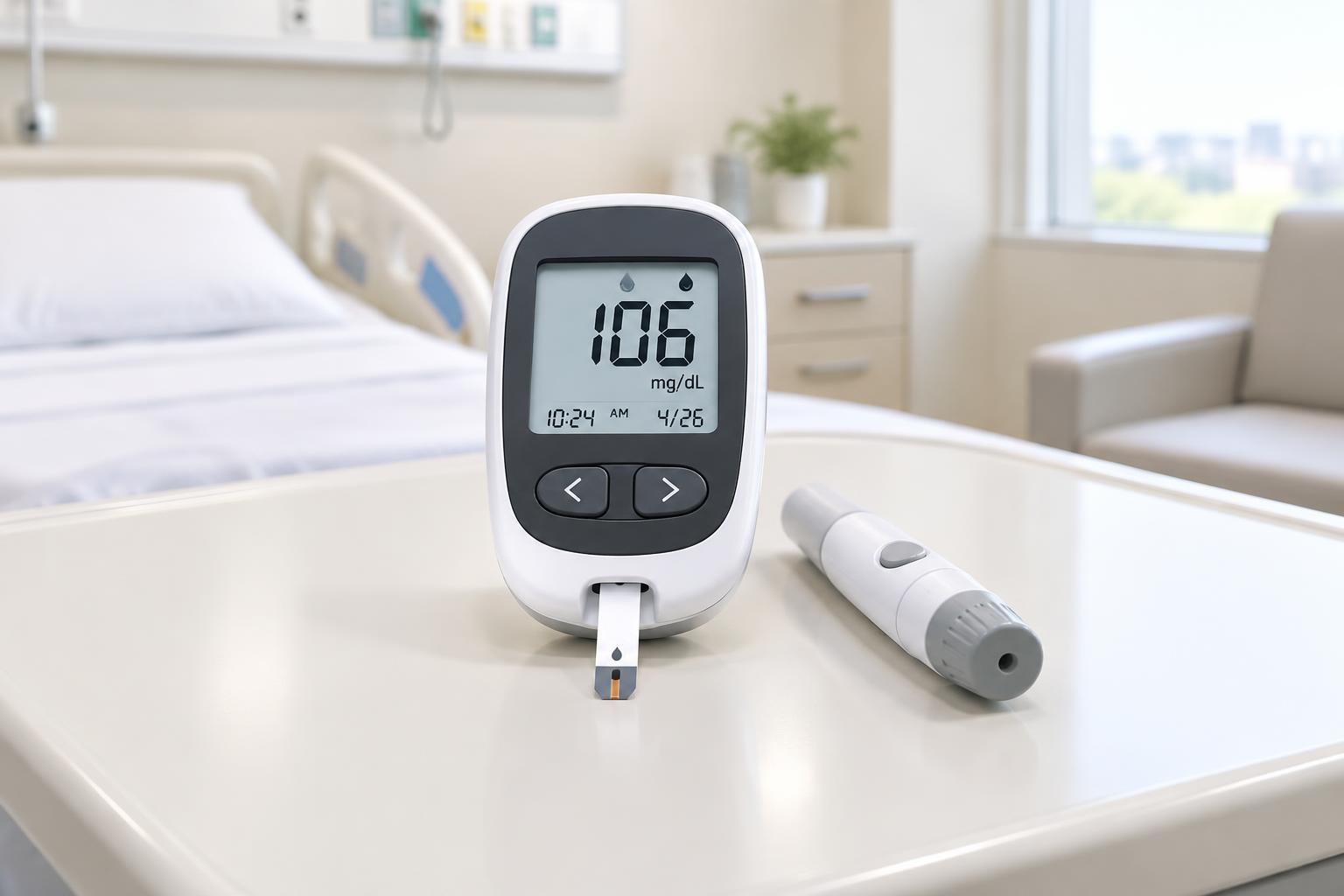
Blood Sugar Devices
What it does: A glucometer checks your blood sugar using a small drop of blood, usually from your fingertip. In the hospital, blood sugar may commonly be checked before meals and at bedtime (AC/HS), but some patients may need checks every 4–6 hours, more frequently, or on a different schedule depending on their condition and treatment.
What it looks like: A small handheld meter with a digital screen, a finger-pricking lancet device, and a thin disposable test strip that is inserted into the meter before each check.
What you may notice: Usually a short beep when the strip reads the blood drop, then the number appears on the screen. It is otherwise silent.
When to ask: What is my blood sugar testing schedule, and what is my target range?
Breathing support
These tools help deliver oxygen, open the airways, or support breathing when the body needs extra help.
Oxygen / nasal cannula
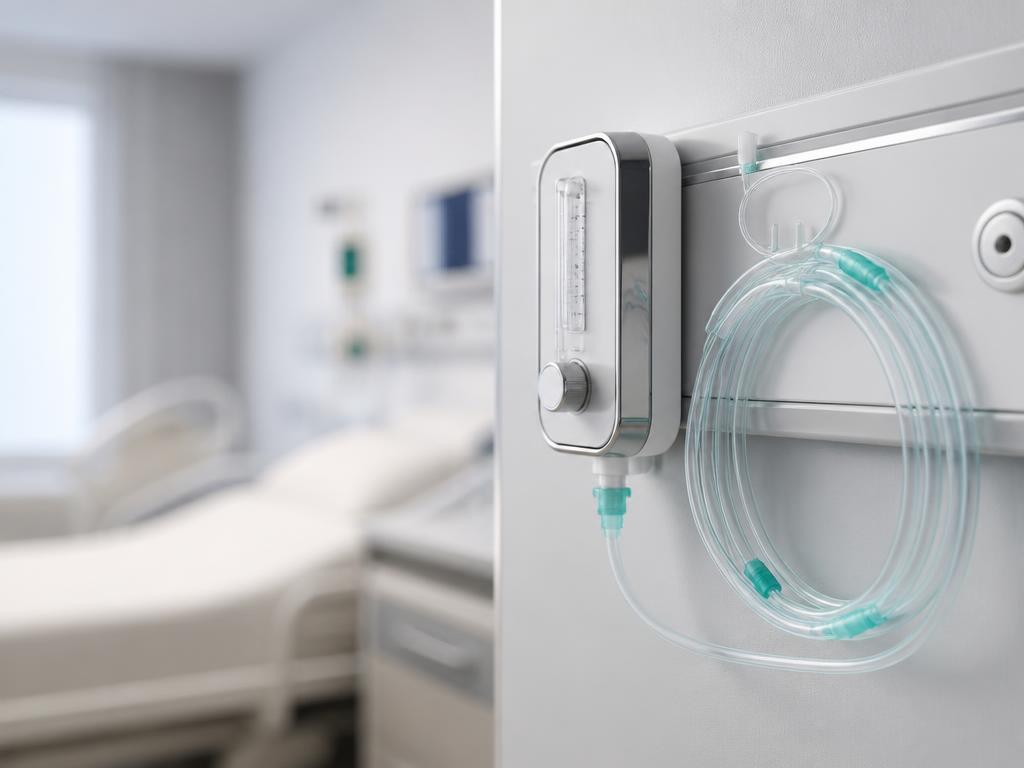
Oxygen / nasal cannula
What it does: Thin plastic tubes that sit in the nose and give extra oxygen to make breathing easier.
What it looks like: Two small prongs that go into the nostrils, with tubing that loops over the ears and connects to an oxygen source on the wall or a portable tank.
What you may notice: You may hear a soft hissing sound from the tubing. The flow is usually quiet.
When to ask: Ask how much oxygen you are on, whether you can move around with it, and what to do if the tubing falls out, gets wet, or the prongs feel dry.
Oxygen mask
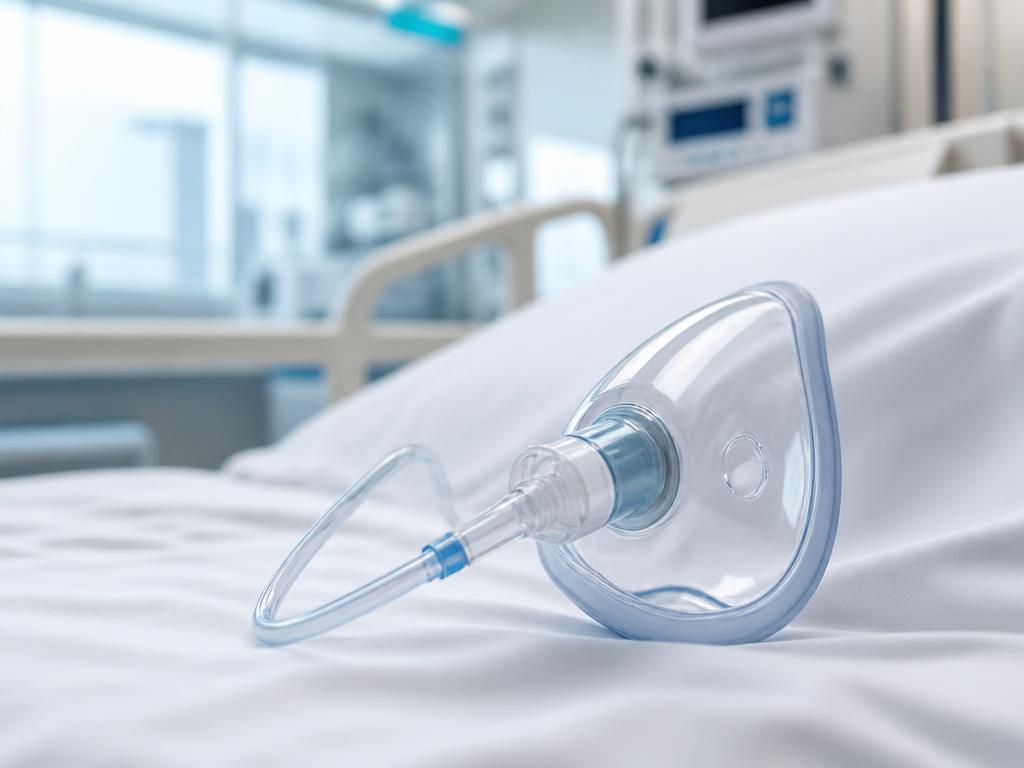
Oxygen mask
What it does: Covers the nose and mouth to deliver a higher amount of oxygen than nasal prongs can provide.
What it looks like: A clear or green plastic mask held in place by an elastic strap around the head. It may have tubing attached.
What you may notice: You may feel or hear air flowing into the mask. The air can feel cool and may dry out the lips.
When to ask: Tell the nurse if the mask feels too tight, you feel short of breath while wearing it, or your lips or nose become very dry or cracked.
Nebulizer
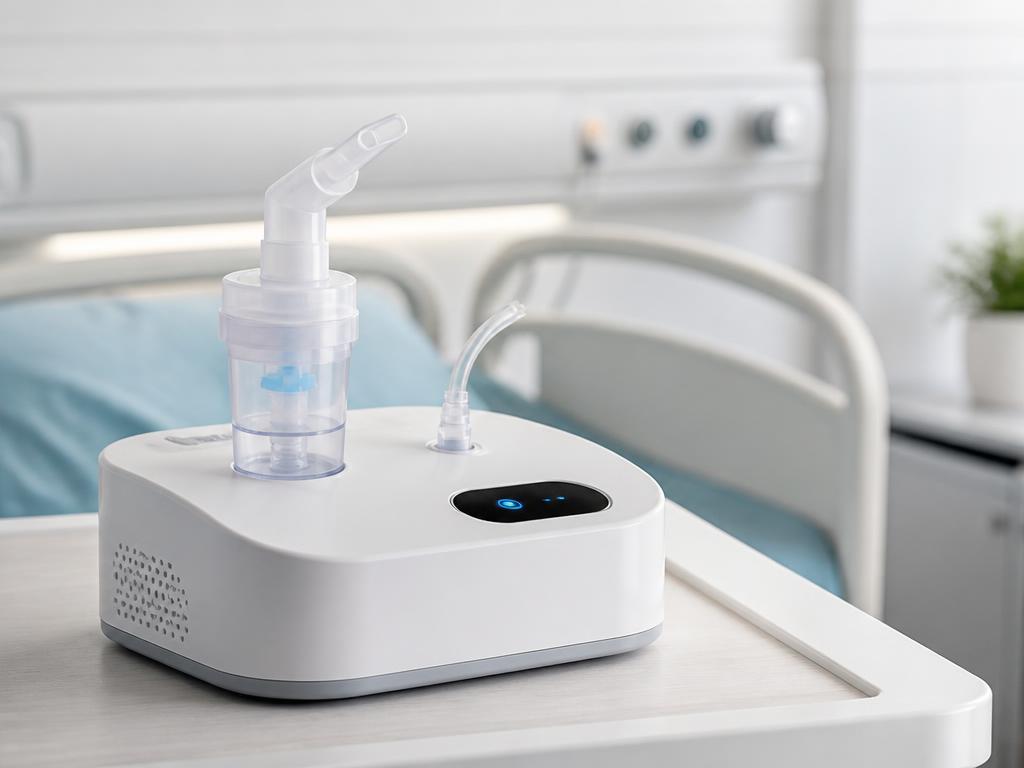
Nebulizer
What it does: Turns liquid medicine into a fine mist that is breathed in through a mask or mouthpiece to open the airways.
What it looks like: A small cup that holds medicine, connected to an air machine by a tube. A mask or mouthpiece attaches to the cup.
What you may notice: The machine makes a soft humming or buzzing sound while it runs. Treatment usually lasts 10 to 15 minutes.
When to ask: Ask how often treatments are scheduled, what side effects to watch for, and whether you should use a spacer or inhaler instead.
Incentive spirometer
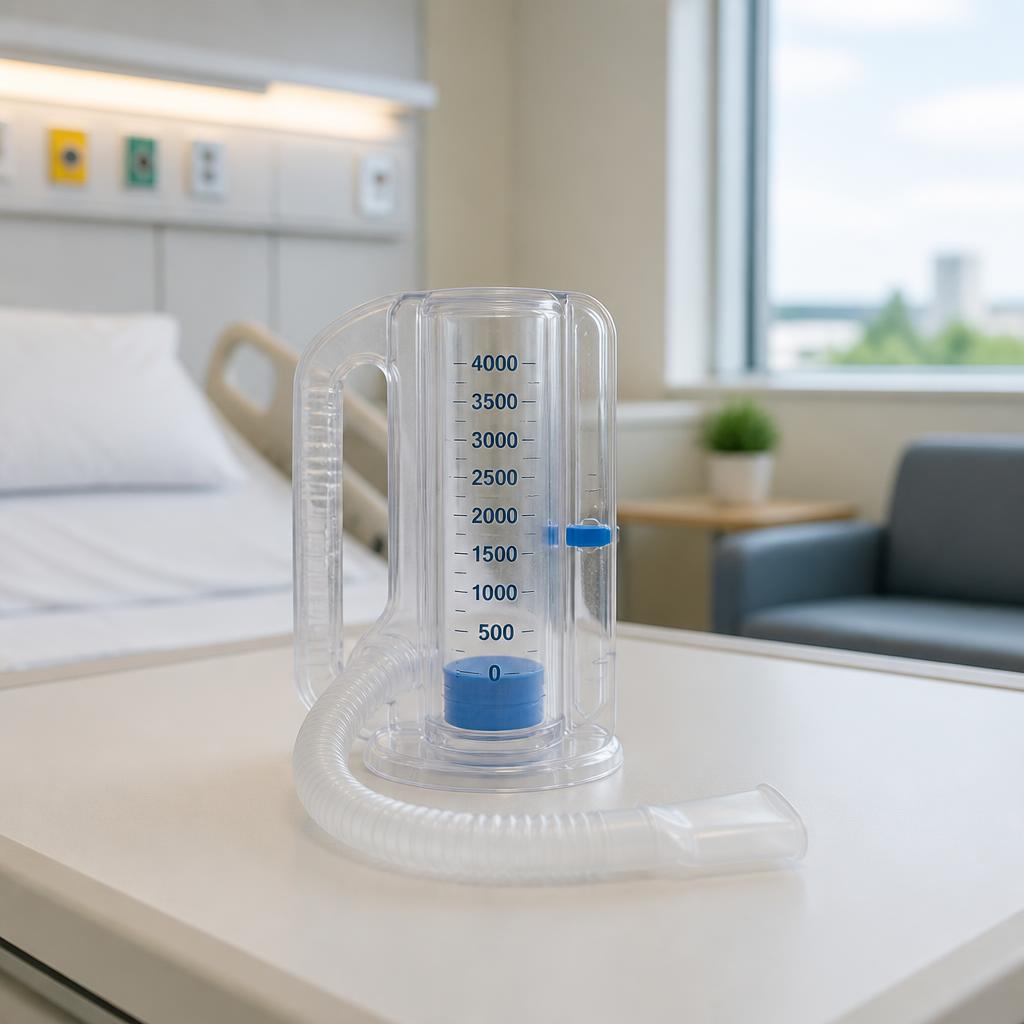
Incentive spirometer
What it does: A handheld breathing exerciser that helps you take slow, deep breaths after surgery or illness so the lungs stay open and pneumonia is less likely.
What it looks like: A clear plastic chamber with numbered markings and a floating indicator ball or piston inside, plus a flexible tube and mouthpiece. A small slider on the side is set to your breathing goal.
What you may notice: Silent, with no alarms. You may feel a stretch in your chest and cough afterward, which is expected and helps clear the lungs.
When to ask: Ask what your target number is, how often you should use it, and whether your numbers are improving each day.
Suction machine
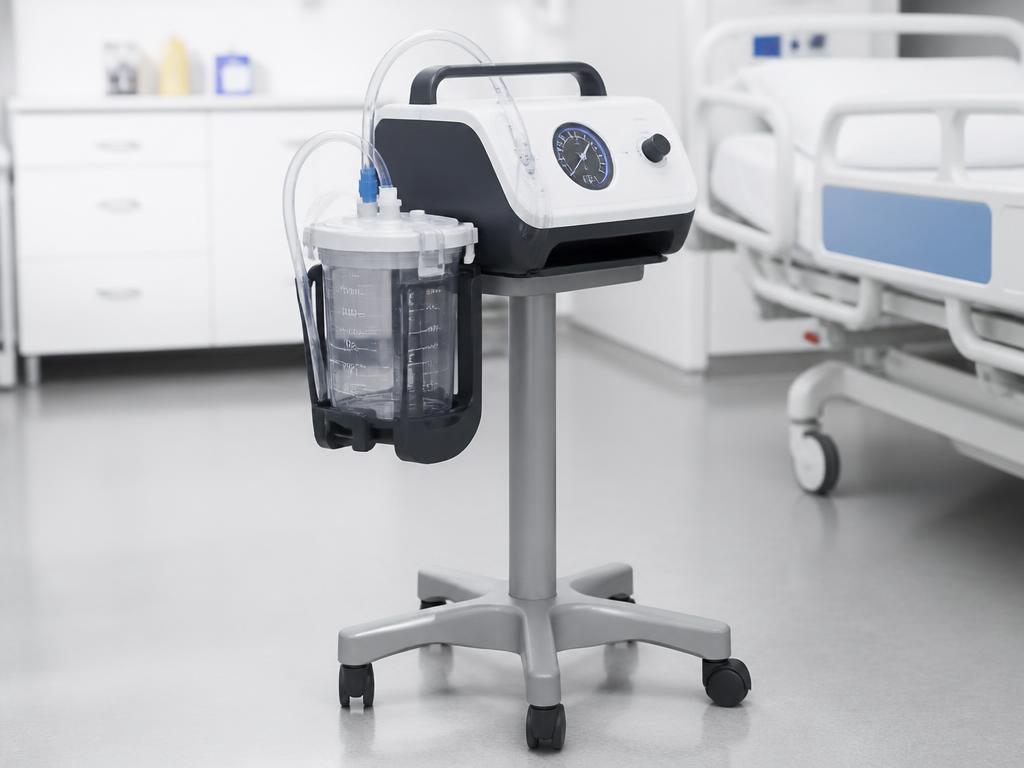
Suction machine
What it does: Removes mucus, saliva, or secretions from the mouth or airway to help with breathing and coughing.
What it looks like: A small portable machine with a container, tubing, and a thin suction catheter or tip. Wall suction may also be used.
What you may notice: It makes a loud gurgling or vacuum noise when turned on. Staff usually use it only for short periods.
When to ask: Ask when suctioning is needed, whether you or a family member will be taught to use it, and what to do if secretions increase or breathing worsens.
Ventilator
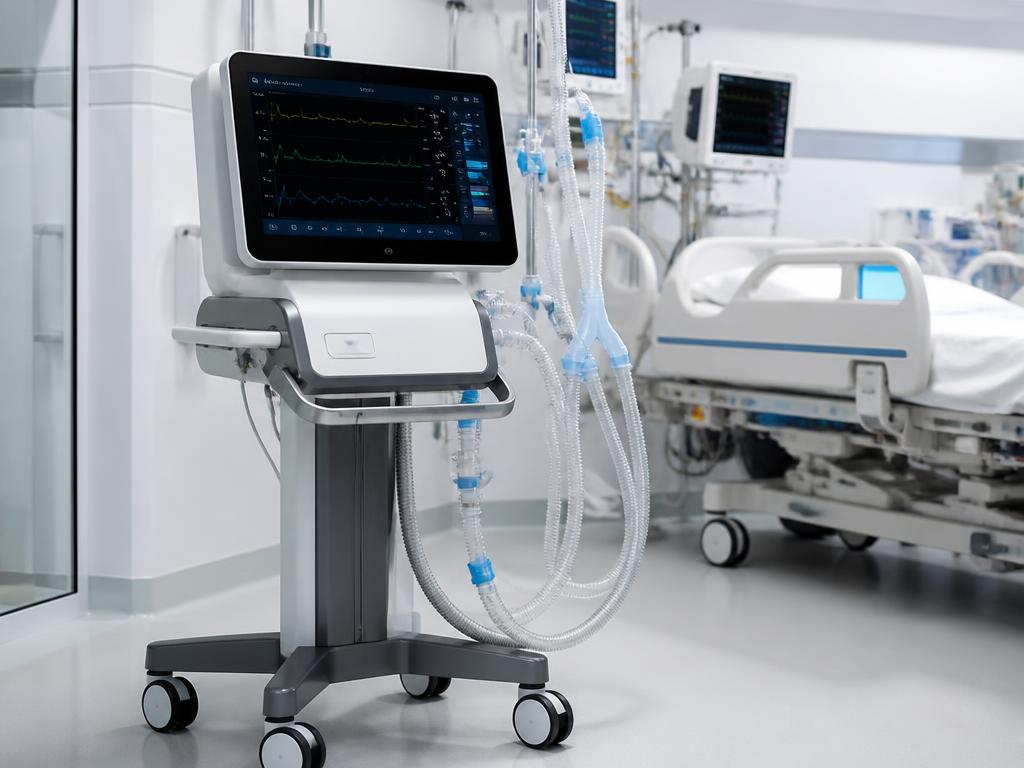
Ventilator
What it does: A machine that helps a patient breathe or breathes for them when they are too weak or sleepy to breathe well on their own.
What it looks like: A larger machine on a stand with many tubes, wires, and a screen. It connects to a breathing tube in the mouth or nose, or to a special tube in the neck.
What you may notice: You will hear a steady whoosh or rhythmic airflow. Alarms may sound if a tube kinks, disconnects, or if breathing changes.
When to ask: Ask the team what the goals are, how the patient can communicate, and what the plan is for weaning off the machine when it is safe.
Tubes, lines, and drains
These devices move fluids, nutrition, or air in and out of the body. They are usually temporary and removed as soon as it is safe.
Catheter and drainage bags
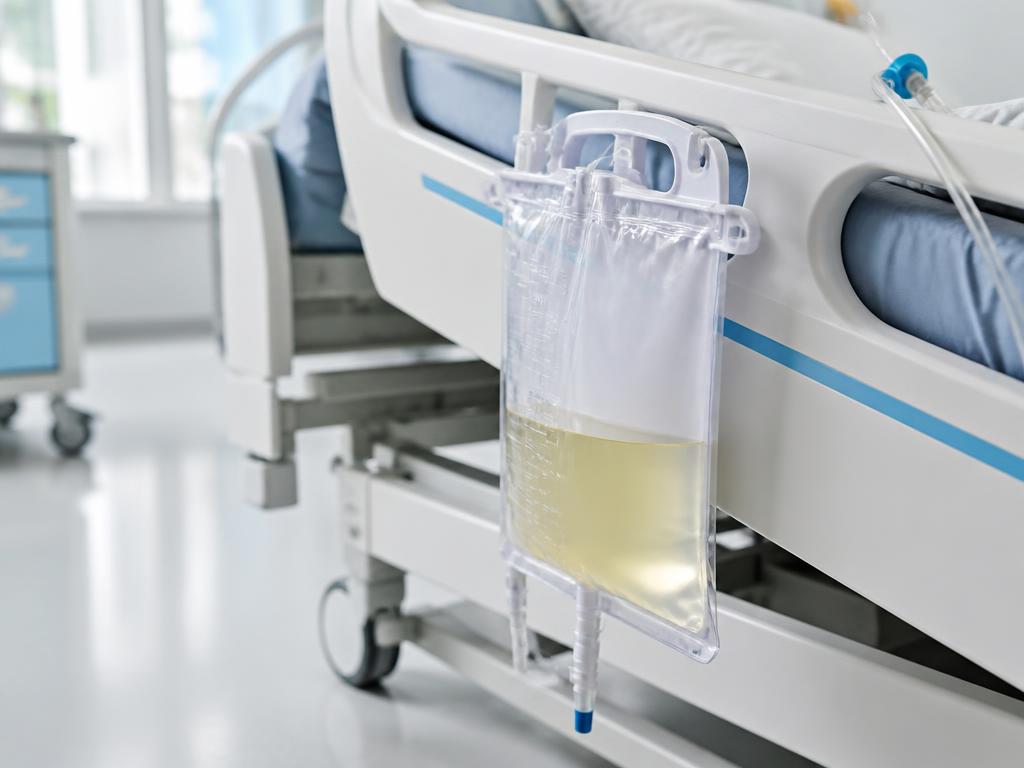
Catheter and drainage bags
What it does: A soft tube placed in the bladder drains urine into a bag so the team can measure output and protect the skin.
What it looks like: A thin tube that runs from the body into a clear bag. The bag has measurement markings and may hang on the bed frame.
What you may notice: Usually silent. You may see urine flowing into the bag when you move or when the catheter is new.
When to ask: Call the nurse if the bag is not draining, urine looks bloody or cloudy, the tube pulls, or you feel pain, burning, or the urge to urinate.
Feeding tube
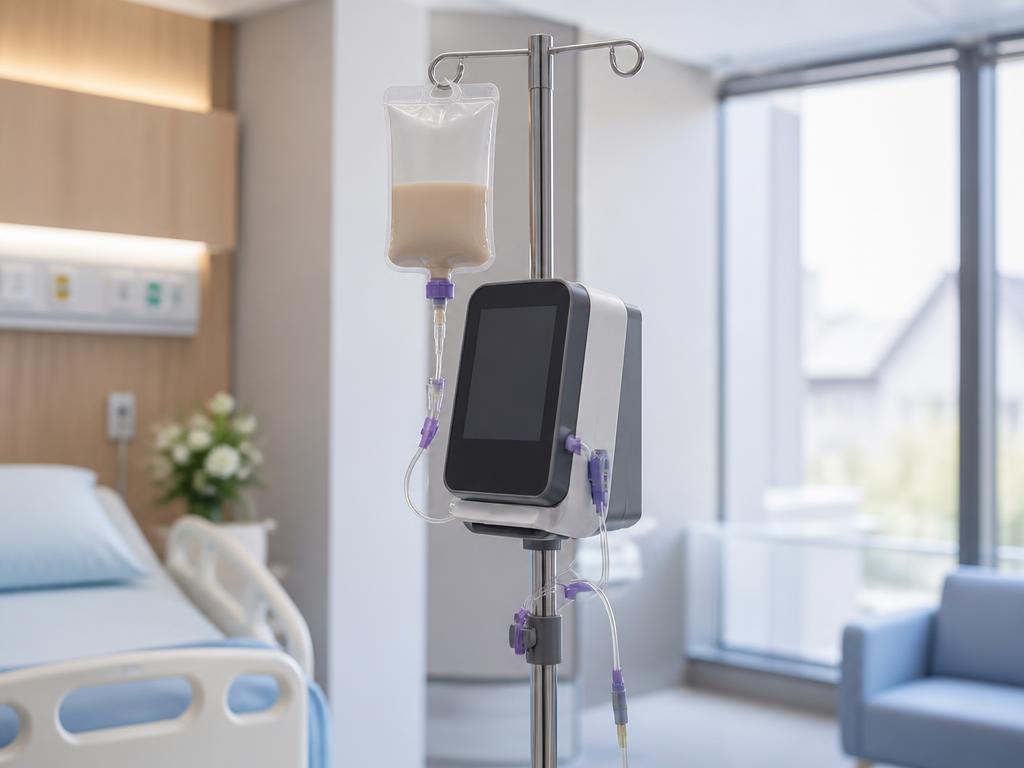
Feeding tube
What it does: Carries liquid nutrition, fluids, and medications to the stomach or intestine when eating by mouth is not safe.
What it looks like: A thin tube that enters through the nose and goes down into the stomach, or a tube placed through a small opening in the abdomen. A bag of formula may hang on a pole.
What you may notice: The feeding pump may click or hum softly as it pushes formula at a set rate.
When to ask: Ask how to tell the tube is in the right place, whether anything can be given by mouth, and what to do if the tube clogs, leaks, or comes out.
Chest tube
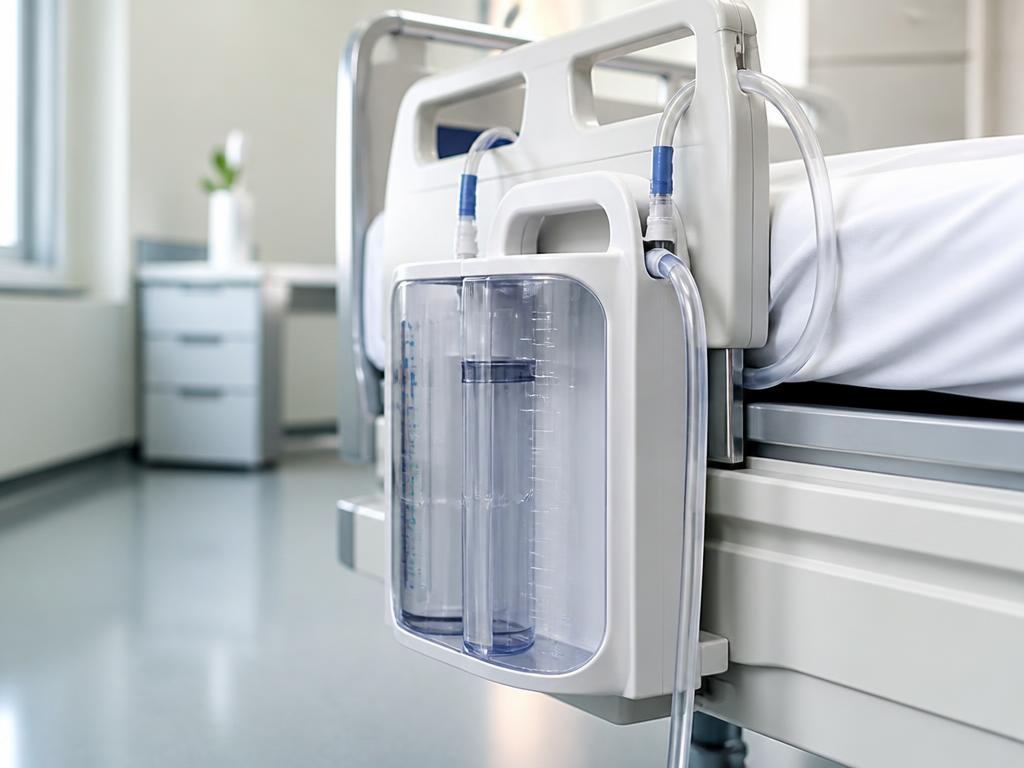
Chest tube
What it does: A tube placed between the ribs and into the space around the lung to drain air, blood, or fluid so the lung can expand.
What it looks like: A clear tube coming from the side of the chest and connected to a drainage box or collection chamber. The box may bubble gently.
What you may notice: You may hear bubbling in the collection chamber. The tube site is covered with a dressing and may be taped tightly.
When to ask: Call the nurse right away if the tube pulls out, the dressing becomes loose, there is new bleeding, sudden shortness of breath, or the bubbling stops unexpectedly.
Jackson-Pratt (JP) drain
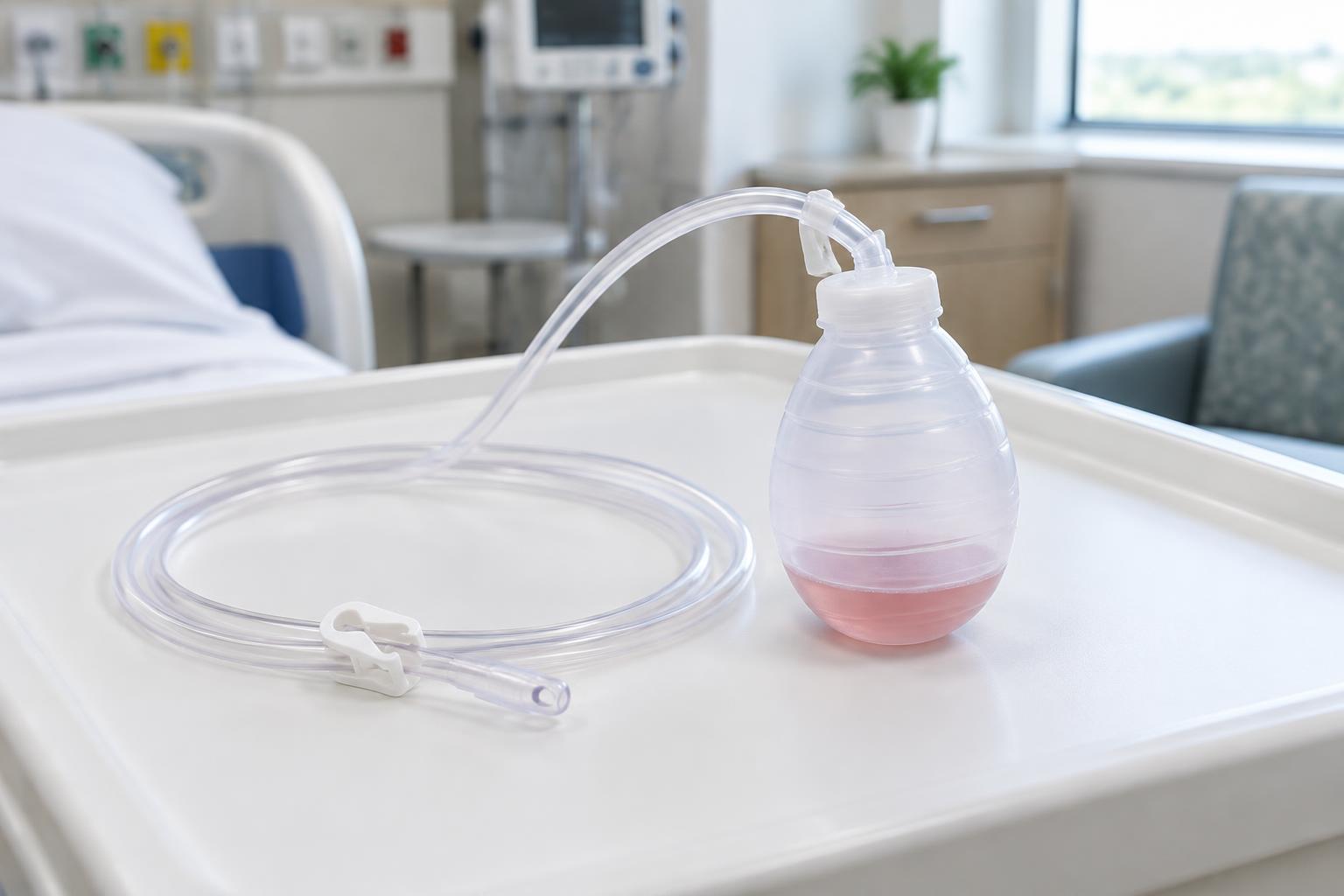
Jackson-Pratt (JP) drain
What it does: A Jackson-Pratt drain, often called a JP drain, removes blood and fluid from a surgical area so swelling is reduced and healing can be monitored.
What it looks like: A thin tube comes out through the skin near the surgical area and connects to a small, soft, clear bulb. The bulb is squeezed flat to create gentle suction and collect drainage.
What you may notice: The drain is usually silent. You may see red, pink, yellow, or clear fluid in the bulb. The amount and color should usually change as healing continues.
When to ask: Call the nurse if the drain comes out, the bulb will not stay compressed, drainage suddenly increases or stops, bright-red blood fills the bulb, the tubing leaks, or the insertion site becomes more red, swollen, painful, warm, or has pus.
Central line / PICC line
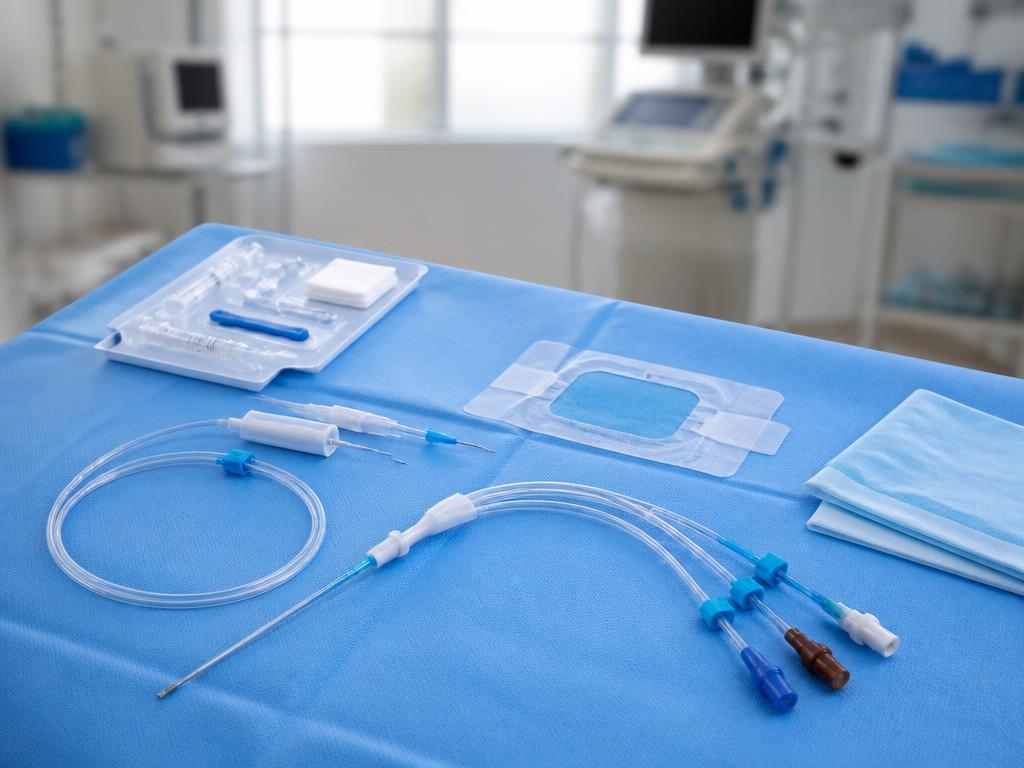
Central line / PICC line
What it does: A longer IV line placed in a large vein, often in the chest, neck, arm, or groin, used for medicines, fluids, blood draws, or nutrition.
What it looks like: A small tube entering the skin with a clear dressing over it. It may have one or more ports with caps on the ends.
What you may notice: Usually silent. Some central lines connect to an infusion pump similar to a regular IV.
When to ask: Ask why a central line is needed, how long it will stay in, what activities to avoid, and what signs of infection to watch for.
Arterial line
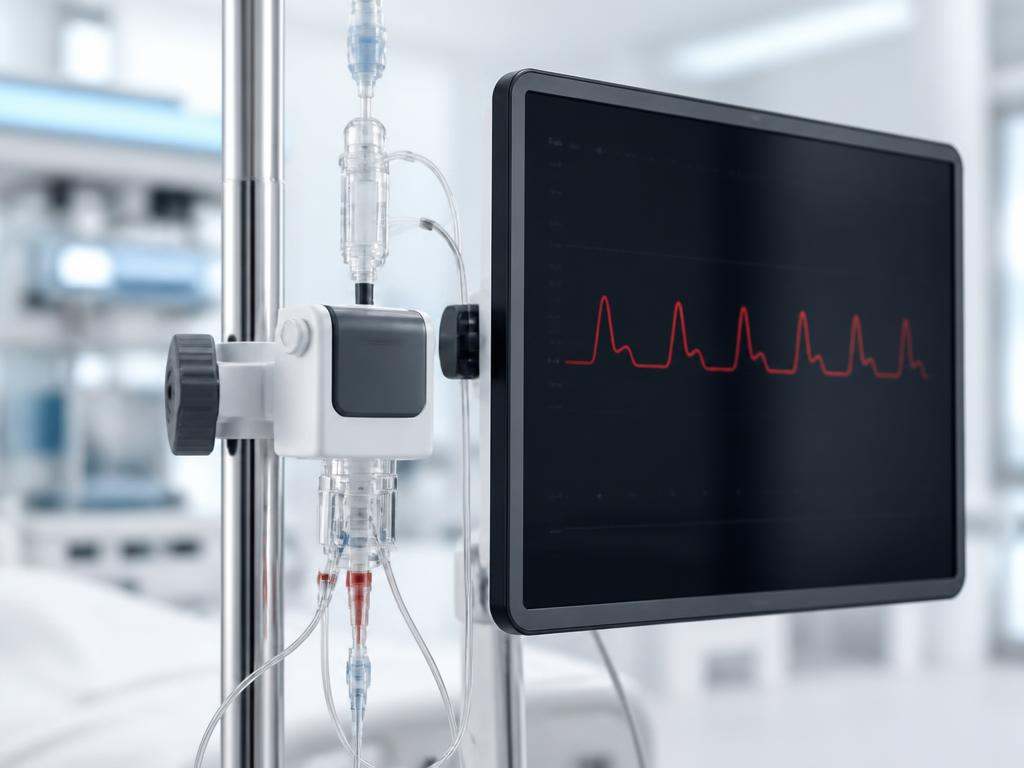
Arterial line
What it does: A thin tube placed in an artery, usually in the wrist, to measure blood pressure continuously and draw blood for frequent lab tests.
What it looks like: A small tube taped to the wrist, connected by tubing to a monitor that shows a blood pressure wave on the screen.
What you may notice: Usually silent. The monitor shows a moving line and numbers. The hand must be kept still so the reading stays accurate.
When to ask: Ask why the arterial line is needed, how long it will stay in, and what to report if the hand becomes numb, cold, pale, or very painful.
Wound vacuum
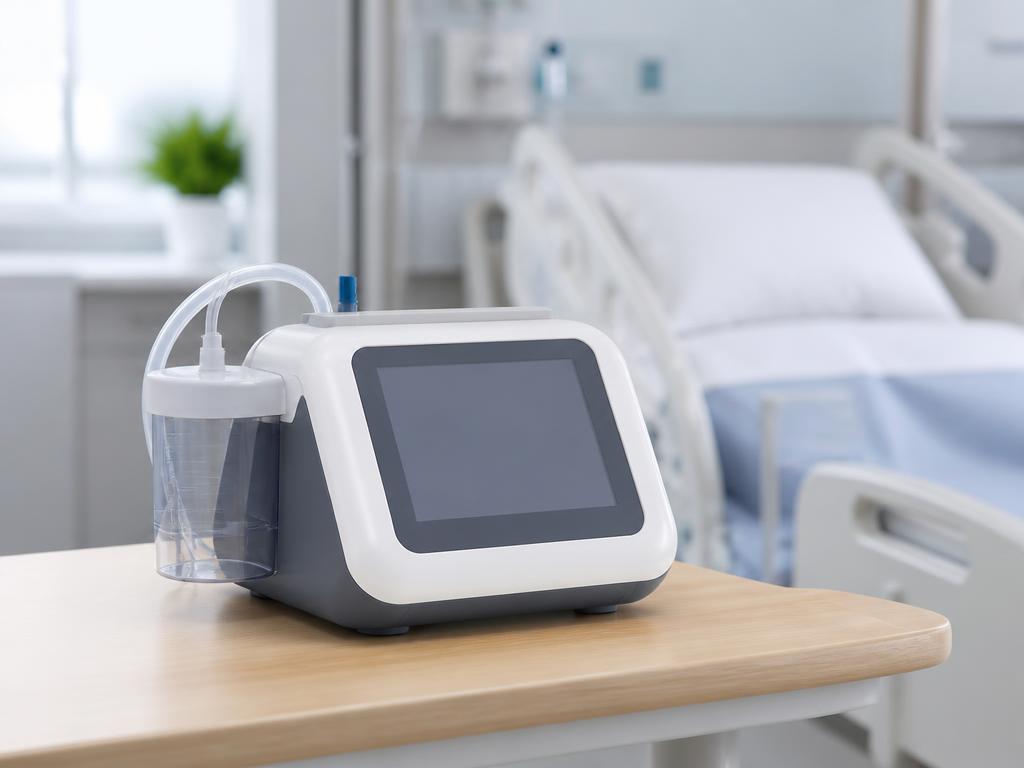
Wound vacuum
What it does: Also called negative pressure wound therapy, this device gently suctions fluid from a wound to help it heal faster.
What it looks like: A foam or gauze dressing over the wound, sealed with clear tape, and connected by tubing to a small canister and pump.
What you may notice: The pump runs quietly with a low hum. You may feel gentle suction pulling the dressing inward.
When to ask: Call the nurse if the alarm sounds, the dressing seal breaks, you smell a strong odor, or you see new bleeding, swelling, or pus around the wound.
Mobility and safety
These items help prevent falls, blood clots, and pressure injuries while keeping you as active as safely possible.
Sequential compression devices (SCDs)
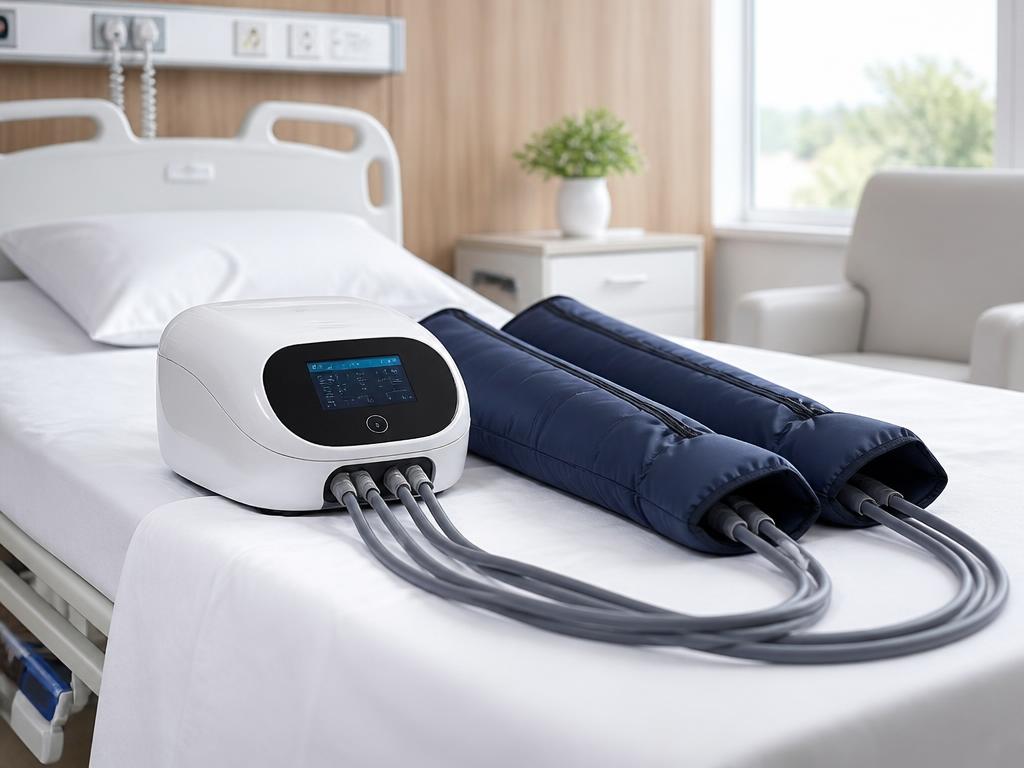
Sequential compression devices (SCDs)
What it does: Soft sleeves wrapped around the calves or thighs that inflate and deflate to keep blood moving and prevent clots.
What it looks like: Fabric sleeves that wrap around the legs and connect by tubes to a small pump at the foot of the bed.
What you may notice: The pump makes a soft whoosh as the sleeves fill with air and then release in a rhythm.
When to ask: Ask when you should wear them and when it is safe to remove them. Tell staff if the sleeves hurt, feel too tight, or cause numbness or tingling.
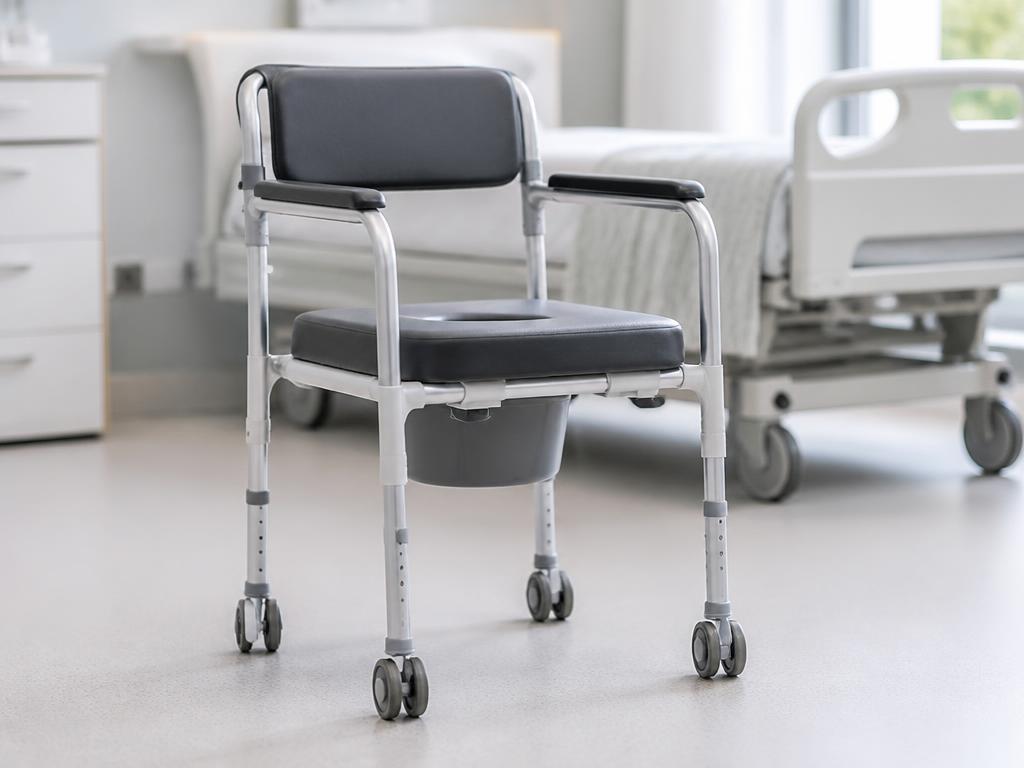
Bedside commode
Bedside commode
What it does: A portable toilet chair kept next to the bed for patients who can get up safely but cannot walk all the way to the bathroom.
What it looks like: A chair with a seat opening, a bucket underneath, and armrests. It may have wheels or be stationary.
What you may notice: Usually silent. Staff will empty and clean the bucket after each use.
When to ask: Ask staff to show you how to use it safely, whether you need help getting on and off, and how to call for help if you feel unsteady.
Walker, cane, or gait belt

Walker, cane, or gait belt
What it does: Helps patients walk safely after surgery, injury, or weakness. A gait belt is a sturdy strap placed around the waist so staff can support the patient.
What it looks like: A metal walker with no wheels or with wheels on the front legs; a cane with a rubber tip; or a cloth belt around the waist that staff hold onto.
What you may notice: Usually silent except for soft clicking or tapping on the floor.
When to ask: Ask when it is safe to walk, whether you need a therapist present, and how to use the equipment without leaning too far forward.
Comfort and communication
These tools help you reach staff, manage pain, stay comfortable, and keep a safe temperature.
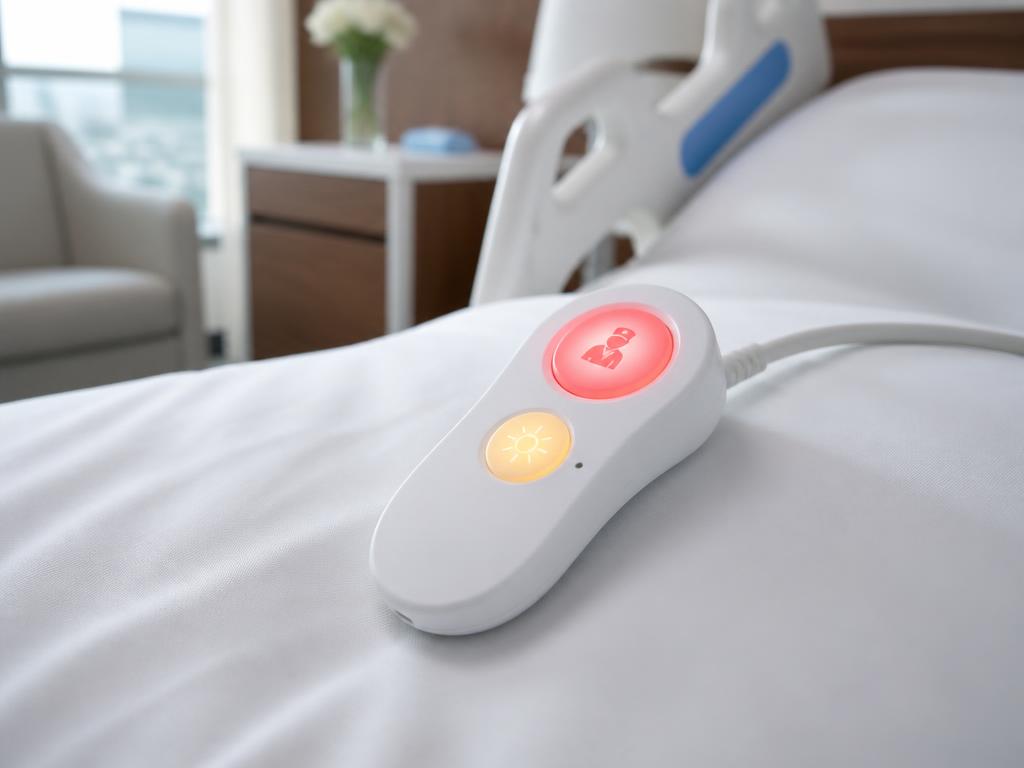
Call button and bed controls
Call button and bed controls
What it does: The call button lets you reach the nurse at any time. Bed controls adjust the head, foot, and height of the bed.
What it looks like: A handheld remote on a cord, often clipped to the bed rail. Bed controls may be buttons on the rail or on the side of the bed.
What you may notice: Pressing the call button usually turns on a light outside the room and may make a soft tone at the nurses' station.
When to ask: Ask staff to show you how to call for help, raise the head of the bed, use the side rails, and lower the bed safely before you try to get up alone.
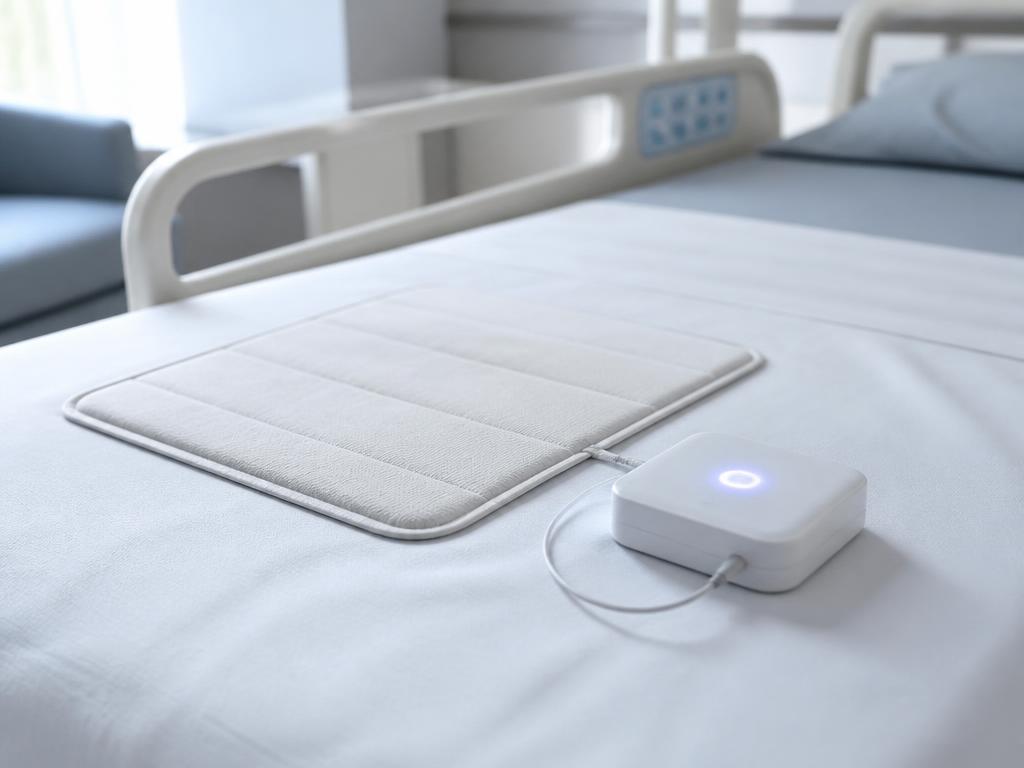
Bed alarm
Bed alarm
What it does: A sensor pad or bed setting that alerts staff when a patient who is at risk for falls tries to get up without help.
What it looks like: May be a thin pad under the patient, a sensor on the bed rail, or a built-in bed sensor connected to the nurses' station.
What you may notice: A beeping alarm at the bedside or at the nurses' station when weight shifts or the patient tries to stand.
When to ask: Ask why the alarm is on, how to call for help instead of getting up alone, and when the alarm can be removed.
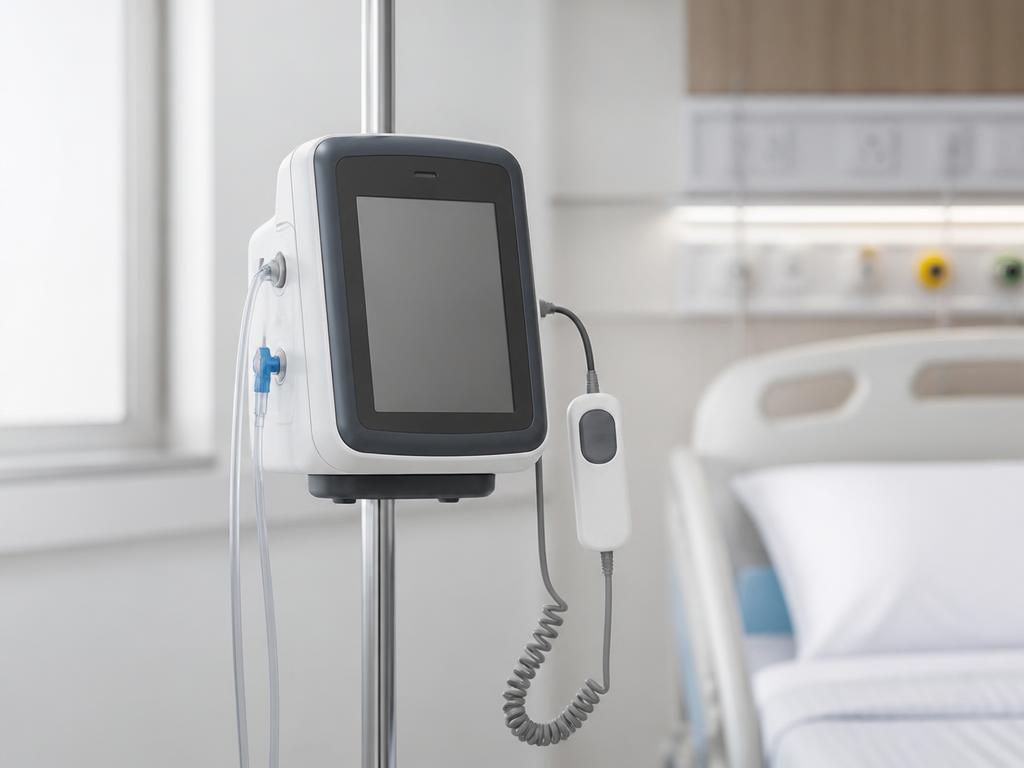
Patient-controlled analgesia (PCA) pump
Patient-controlled analgesia (PCA) pump
What it does: A pump that lets patients give themselves small, safe doses of pain medicine by pressing a button.
What it looks like: An IV pump with a handheld button on a cord. Only the patient should press the button.
What you may notice: The pump beeps when a dose is delivered or when it needs attention. It has built-in safety limits so overdosing is very hard.
When to ask: Ask how often you can press the button, what to expect after a dose, and what side effects to report.
Heating and cooling blankets
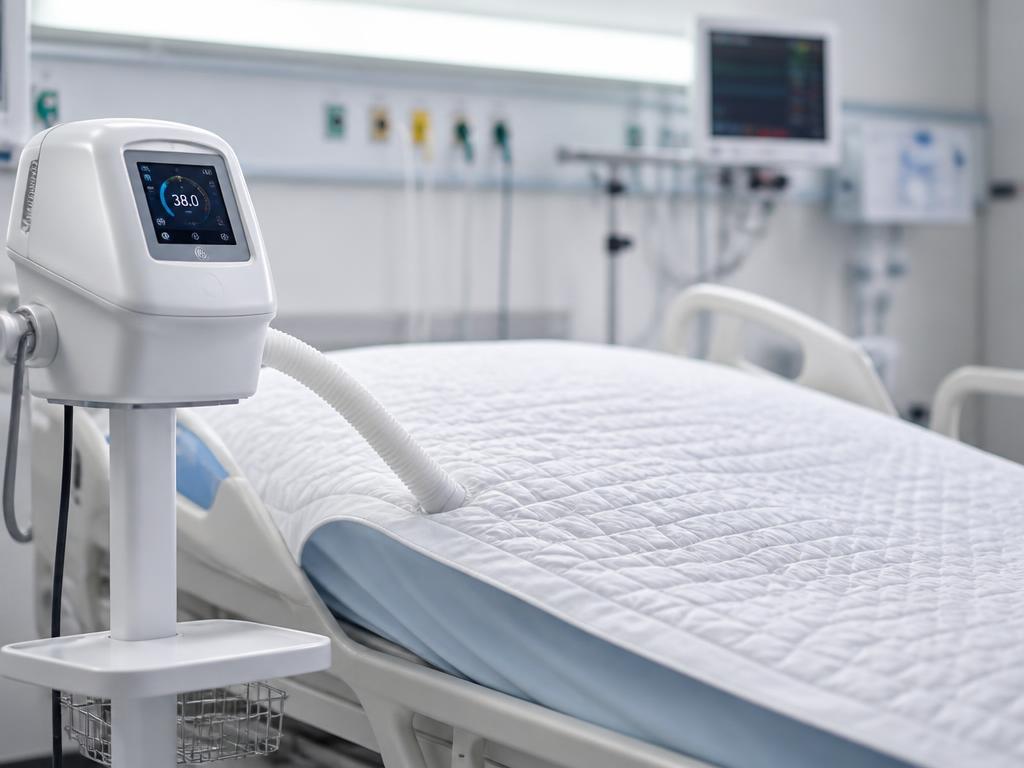
Heating and cooling blankets
What it does: Help keep body temperature in a safe range during and after surgery, illness, or certain treatments.
What it looks like: A special blanket or pad connected to a machine that blows warm or cool air through it.
What you may notice: The machine makes a soft fan-like sound while it runs.
When to ask: Ask what temperature goal the team is aiming for and how long the blanket will be needed.
Restraints
Restraints are devices that limit movement to protect a patient from serious harm. They are a last resort, used only when less restrictive options have not worked and a patient is at risk of pulling out life-saving tubes, falling, or injuring themselves. Every restraint needs a doctor's order, is checked often, and is removed as soon as it is safe.
Soft wrist restraints
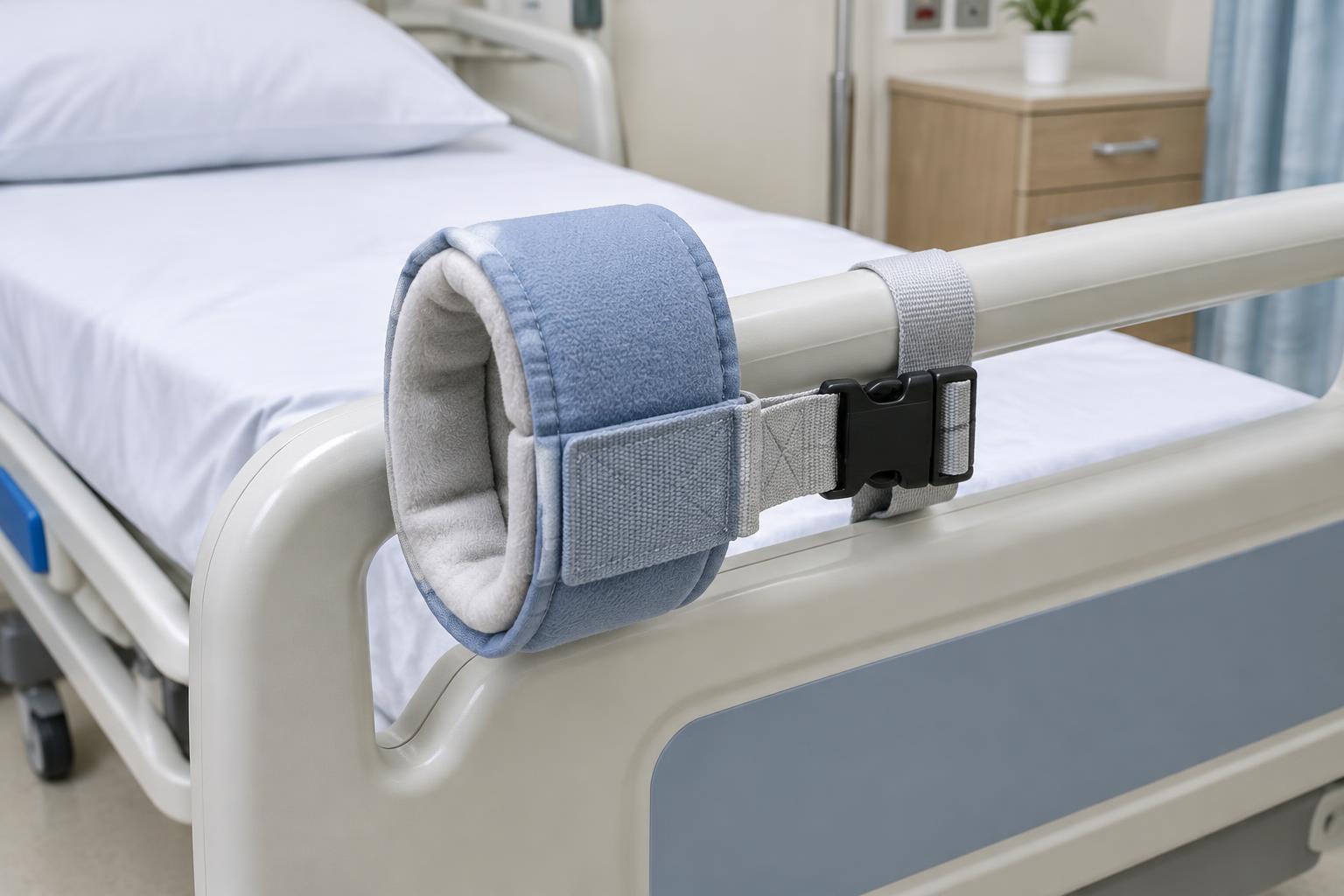
Soft wrist restraints
What it does: Padded cloth cuffs placed around the wrists and attached to the bed frame to stop a patient from pulling at life-saving tubes or climbing out of bed before it is safe.
What it looks like: Soft, padded fabric cuffs with foam lining that wrap around each wrist. A fabric strap connects each cuff to the bed frame or side rail with a quick-release buckle.
What you may notice: Usually silent. You may hear the buckle click when staff check or adjust the fit.
When to ask: Ask the nurse why the wrist restraints are needed, how often they are checked, when they will be removed, and what you can do to help keep your family member safe.
Posey / vest restraint
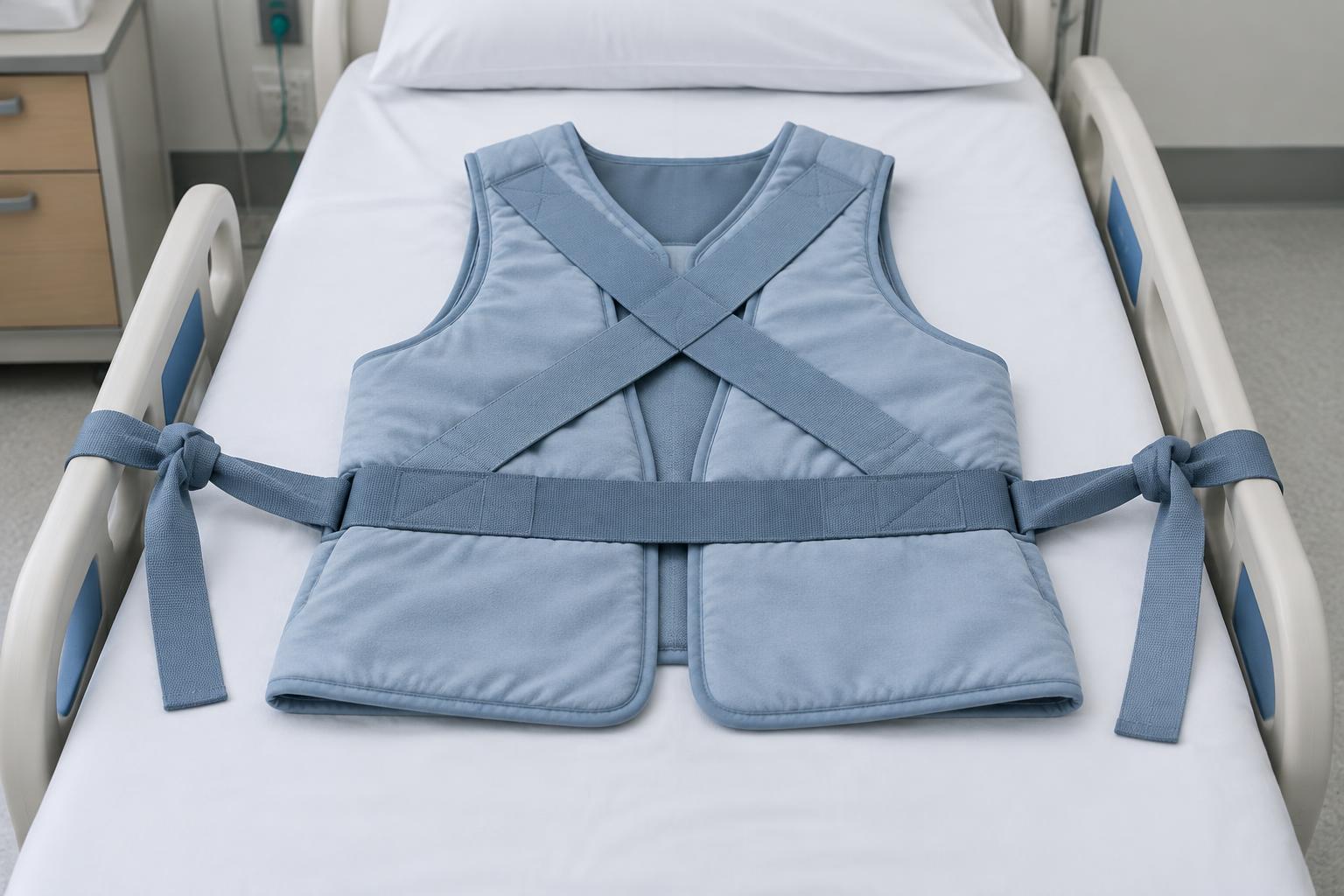
Posey / vest restraint
What it does: A soft padded vest that crosses the chest and ties to the chair or bed to keep a patient from sliding down, falling forward, or standing when it is not safe.
What it looks like: A cloth vest worn over the gown with straps that cross the chest and fasten to the chair back or bed frame. It is soft and padded, not tight against the skin.
What you may notice: Usually silent. Staff adjust the straps during checks.
When to ask: Ask why the vest is in place, how often it is checked, whether the patient can still move and breathe comfortably, and when it can be taken off.
Mittens (hand control mitts)
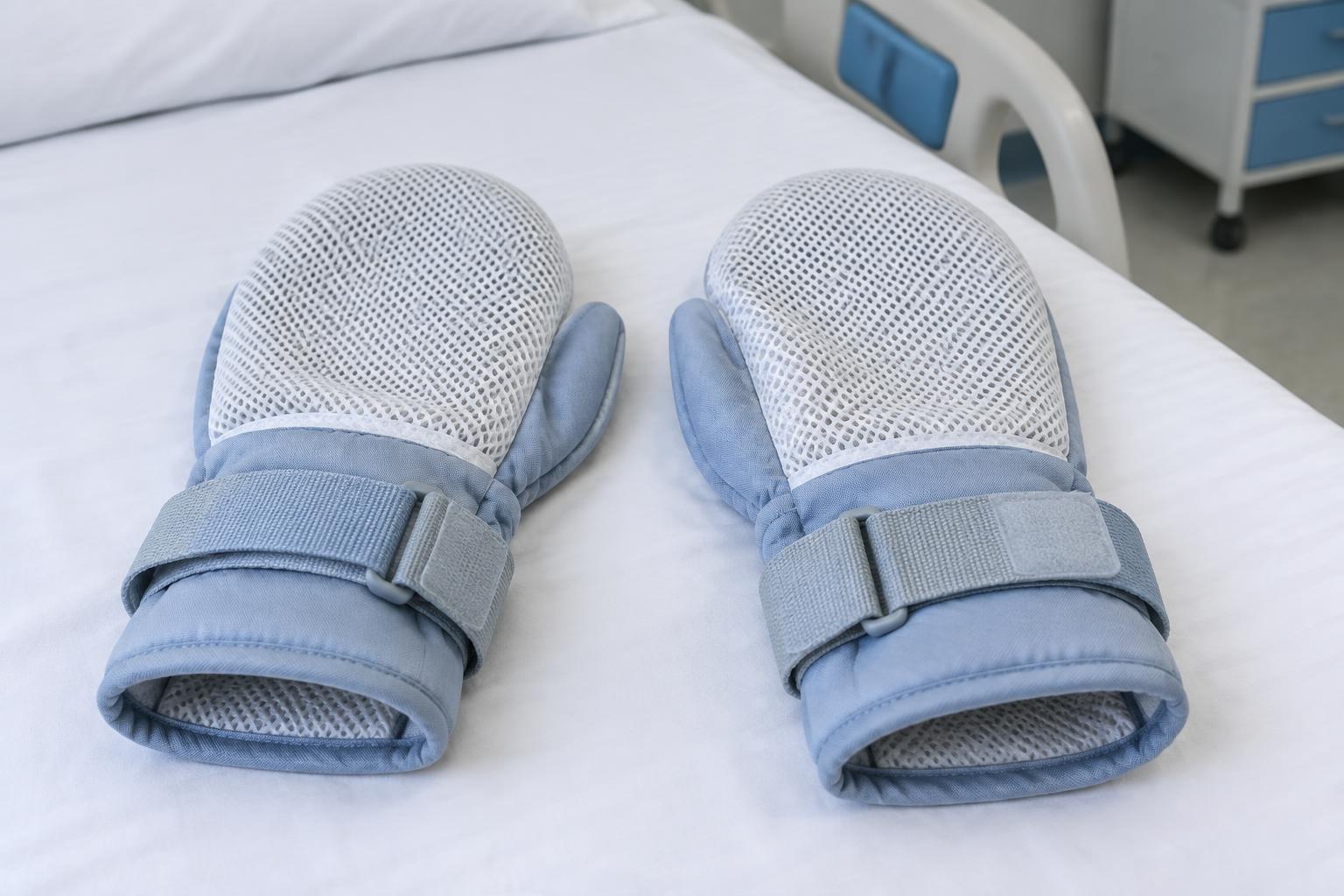
Mittens (hand control mitts)
What it does: Soft cloth or mesh mitts that cover the hands so a patient cannot grab, pull, or twist tubes, lines, or dressings while still allowing the fingers to move.
What it looks like: Padded mitts that slide over each hand and close with a soft strap at the wrist. Some have a mesh top so staff can see the fingers and skin.
What you may notice: Usually silent. The wrist strap may have a small buckle or hook-and-loop closure that staff check at set times.
When to ask: Ask why the mittens are needed, how long they will stay on, and what the plan is for removing them and trying less restrictive options.
You are allowed to ask
If you do not know what something is, what it does, or whether it is safe to move, ask your nurse or CNA. No question is too small. Understanding your equipment can help you feel calmer and more in control during your stay.