Medication Basics
Every medication has a purpose. Medicines may treat an infection, ease symptoms, prevent complications, or help manage a long-term condition.
Generic name: The name of a medicine’s active ingredient.
Brand name: The name a manufacturer gives its product. A brand-name medicine and a generic medicine may have the same active ingredient, but the product name, strength, or form may differ. Ask your pharmacist if you are unsure whether two products are the same. Do not assume that differently named medicines should both be taken.
Dose: How much you are instructed to take at one time. A label may show a medicine’s strength, while your instructions tell you how much to take. These are not always the same. Labels may use mg (milligrams), mcg (micrograms), mL (milliliters), or units.
A tablet may contain 10 mg of medicine, but your prescribed dose depends on the instructions your healthcare professional gives you.
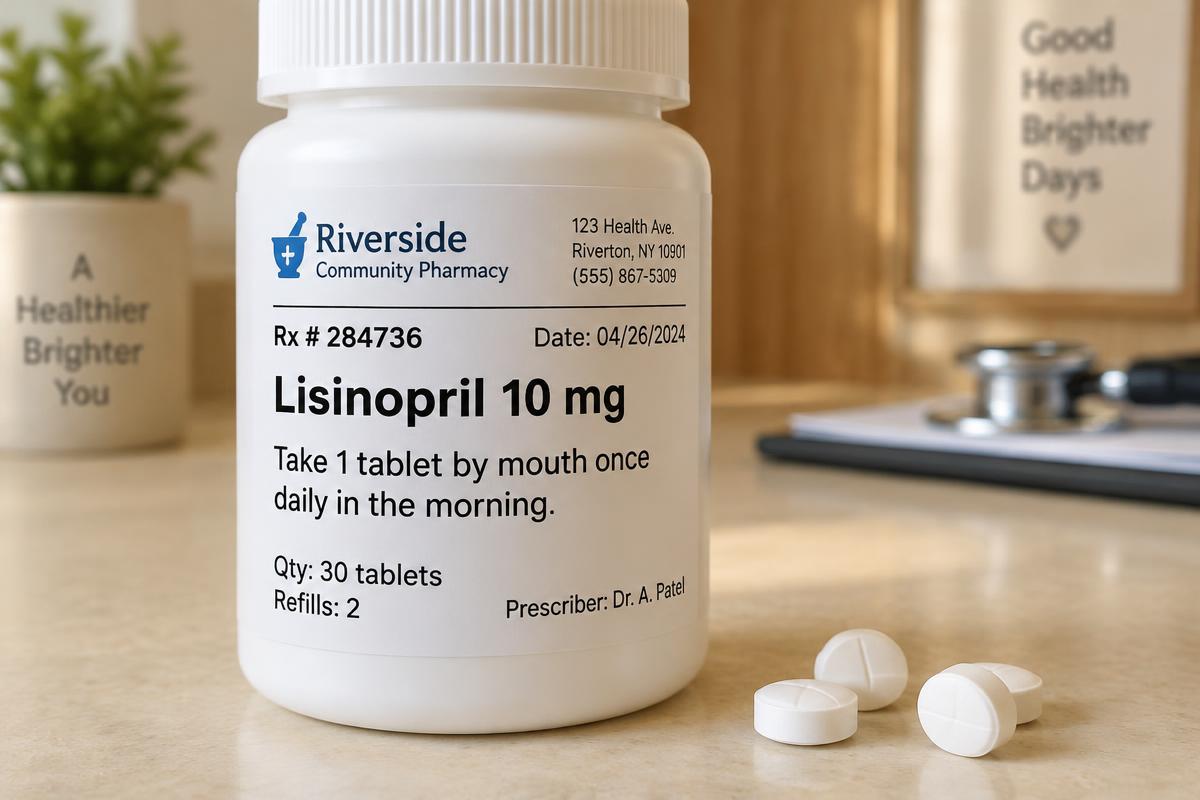
Educational example label — not a medication or dose recommendation:
Lisinopril 10 mg once daily.
In this example, the medicine is lisinopril, the listed strength is 10 mg, and the schedule is once each day. This is for learning only and is not a recommendation to take lisinopril. Your own medicine and instructions may be different.